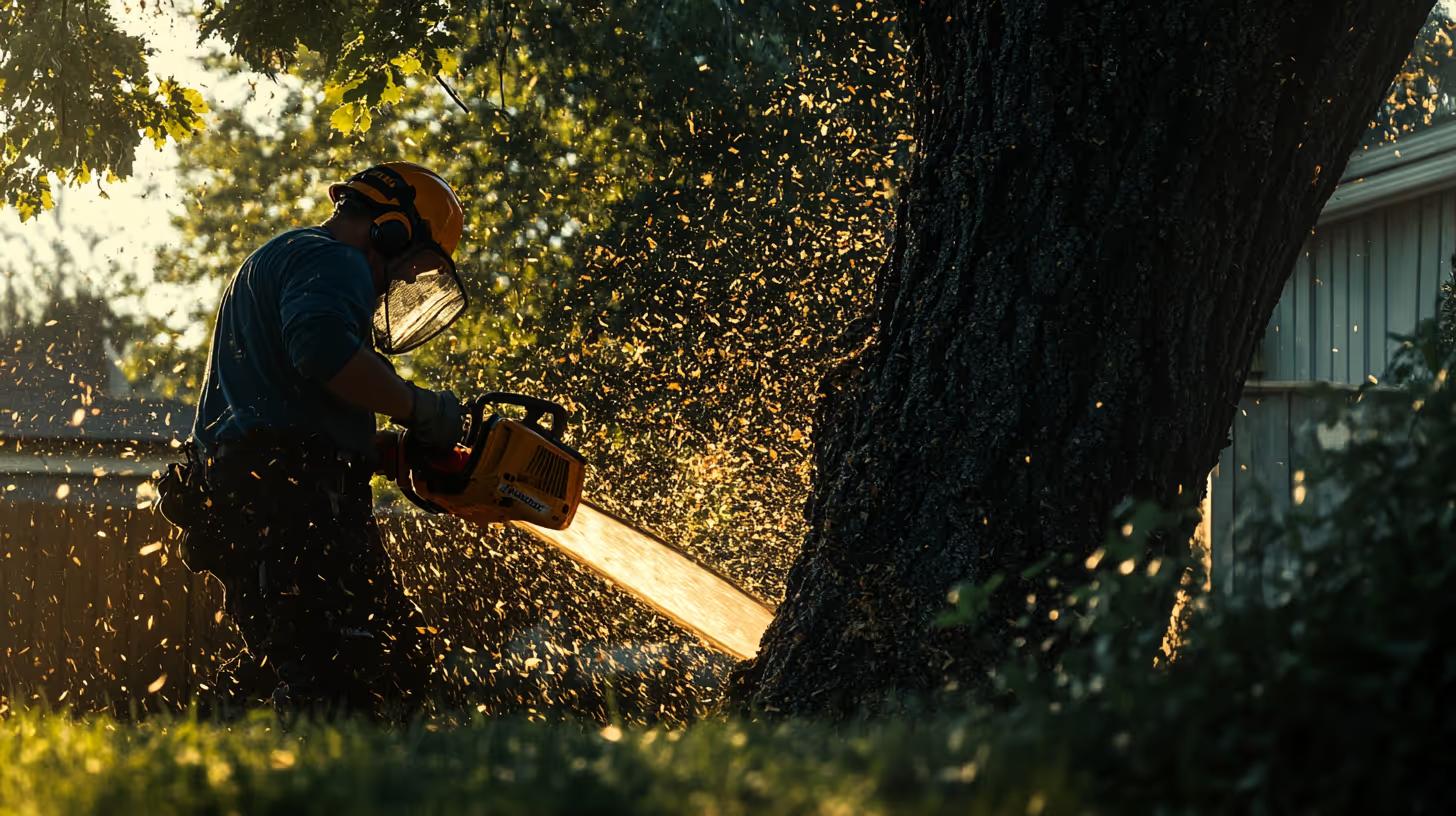

Deciding when to cut down a tree isn't always straightforward. Many homeowners delay making a call for months, sometimes years, watching a tree they're not quite sure about. It doesn't look great, but it's not obviously dead. It leans a little, but it always has. You tell yourself you'll keep an eye on it, and then you forget about it until the next storm rolls through. That hesitation is understandable, but it's also where things go wrong: either a deteriorating tree comes down on a structure before anyone acts, or a perfectly healthy tree gets removed unnecessarily because someone panicked.
Many homeowners lack arboricultural training, and that gap is where costly mistakes happen. A tree that looks healthy from the footpath can be hollow at the base. A tree that looks alarming can have decades of life left in it with the right pruning. Getting a professional assessment from a certified Level 5 arborist can often clarify a tree's condition in a single visit, giving you a defensible, documented answer before you spend a dollar on removal or dismiss a real risk.
This article walks through five practical scenarios that signal a tree may genuinely need to come down, plus what steps to take once you've recognised the signs.
When to cut down a tree: structural red flags you can spot from the ground
You don't need a degree to notice the warning signs of structural failure, but you do need to know what you're looking for and what those signs actually mean.
A lean that developed recently, not gradually
There's an important distinction between a tree that has always grown at an angle and one that has developed a new or worsening lean over recent months. A gradual lean that formed as the tree grew is usually structural, not dangerous on its own. A lean that has appeared or changed noticeably in a short period is a different story entirely. Look for fresh cracking in the ground, lifted soil, or gaps forming near the base on the opposite side to the lean. These are signs the root system is losing its grip. A lean of more than 15 degrees from vertical is the practical threshold arborists use as a high-risk indicator, and if that lean is pointing toward your house, driveway, or a neighbouring structure, it deserves immediate attention.
Trunk cracks, fungal growth, and hollow cavities
Deep vertical cracks or seams in the trunk, particularly where major limbs connect to the main stem, indicate the tree is already structurally compromised. Two vertical cracks on opposite sides of the trunk are especially serious and often signal root injury beneath the surface. Fungal conks or mushrooms growing on the trunk or root flare are equally concerning. Fungal growth on the tree itself is a reliable indicator of internal decay, even when the outer bark looks intact. A large hollow cavity near the base is serious on its own, but when combined with a lean or fungal growth, the tree is typically past what cabling or treatment can safely address. Learn more about professional cabling solutions from a concise overview of what tree cabling involves.
Dead crown and hanging branches
A dead branch here and there is completely normal, particularly on large, mature trees. The risk profile changes significantly when more than 25% of the crown is dead or when you can see large "hangers", broken limbs suspended in the canopy and held up by surrounding branches. These hangers are unpredictable. They can drop in still conditions without warning, and in a tree of any real size, a falling limb poses a serious injury and property risk. Progressive crown dieback that spreads inward from the tips, rather than remaining isolated to a few branches, warrants a proper hazardous tree assessment, not a wait-and-see approach. For a practical checklist of common danger signs, see the guide to signs a tree is dangerous.
Root damage and encroachment: the threat you can't always see
Root problems are among the most commonly missed warning signs because so much of the damage happens underground. By the time homeowners notice the symptoms, the issue has often been developing for years.
Root heave and what it tells you about stability
Root heave presents as soil buckling, roots visibly protruding from the ground, or gaps forming around the base of the trunk. In Sydney's reactive clay soils, these signs are particularly significant: clay expands and contracts with moisture changes, and a tree drawing heavily on the surrounding soil can trigger foundation settlement over time. When anchoring roots rot or are severed, through construction work, trenching, or root-cutting equipment, the tree can fail without warning, even in calm conditions. A tree that survived dozens of storms can come down on a still day once its root structure is sufficiently compromised. For a broader look at common tree hazards and how they present, consult this practical guide on how to tell if a tree is dangerous.
When roots are threatening foundations, pipes, and structures
Root encroachment into underground pipes, beneath slabs, or under retaining walls is common in older Sydney properties with mature trees growing in reactive clay soils. Roots don't typically bore through intact concrete; the real damage comes from roots extracting moisture from those clay soils, causing the ground to shrink and settle unevenly beneath structures. Where existing cracks or joint failures exist in pipes, roots exploit those openings and widen them as they grow. It's worth noting that root encroachment alone doesn't automatically mean the tree must come down. A qualified arborist can assess whether root barriers, targeted pruning, or ongoing monitoring is a viable alternative before recommending full dead tree removal or any other intervention.
Storm damage and disease: when the tree is past recovery
There's a common tendency to look at a storm-damaged tree the morning after and decide it's fine because it's still standing. That's not a reliable assessment, and it's the kind of mistake that leads to delayed failures weeks later.
Reading storm damage correctly after severe weather
Split limbs, exposed heartwood, and root plate movement after a storm permanently alter a tree's risk profile. The structural integrity that existed before the event is gone, and what looks stable in the immediate aftermath can fail as the exposed wood dries out and secondary decay sets in. As a general rule, when 50% or more of a tree has been damaged by a storm, removal is typically the safer and more economical path. Storm-damaged trees need a professional reassessment, even if they appear to be standing fine. In the Sydney metropolitan area, emergency arborist services typically respond within one to four hours for genuine hazards, so there's no reason to leave a damaged tree unassessed for days. If a controlled removal requires specialist equipment, our Crane Tree Work Sydney | My Green Zone Arborists services can be arranged to safely manage large stems and complex lifts.
Disease and dieback that has passed the treatment threshold
Progressive dieback moving inward from the branch tips, bark peeling away from dead wood, and discolouration in the cambium layer (the greenish tissue just beneath the bark) are the key visual indicators of advanced disease. Some conditions can be managed with targeted pruning and treatment; others cannot, and the distinction matters enormously for the decision-making process. A certified arborist can identify which category applies during a single site visit, a considerably better use of time and money than either ignoring the signs or removing a tree that could have been saved.
When a tree's location makes removal the right call
A tree's condition isn't the only factor in this decision. Where it sits on the property determines whether the risk is acceptable. A tree with moderate signs of decline positioned in the far corner of a large rural block is very different from the same tree standing directly beside a home.
The one-tree-height rule and why it matters
The practical concept arborists apply is straightforward: any tree that could reach a regularly occupied structure if it fell sits in what's treated as the "target zone." Trees within one full tree-height of a home, garage, parked vehicle, or boundary fence carry a significantly higher risk rating than trees in open areas. A tree that would be acceptable in a bushland setting becomes a genuine hazard when it's positioned near a structure. This doesn't mean every tree in proximity to a building needs to come down, but it does mean the risk assessment is more urgent and the tolerance for multiple warning signs should be lower.
Proximity to powerlines, fences, and underground services
Trees growing close to overhead powerlines are a non-negotiable professional job, no DIY work is appropriate when branches are within proximity of electrical infrastructure, whether you are trimming or removing the tree. Industry guidance recommends maintaining at least three metres of clearance from powerlines, and any work within that zone must be carried out by a licensed professional in coordination with the relevant utility provider. Separately, trees whose root systems or canopy are interfering with fences, retaining walls, or easements often prompt formal discussions with neighbours or councils, and these situations benefit from an arborist's written assessment before any work proceeds.
When to cut down a tree: permits, professional assessment, and the right next step
Once you've identified one or more of the warning signs covered above, the next step is not to pick up a chainsaw. In most Australian states, removing a tree without council approval is illegal, and the financial consequences of getting this wrong can be severe.
What Australian councils require before a tree comes down
Across NSW, VIC, and QLD, most councils require a formal permit application before any tree is removed, supported by documentation that often includes an arborist's report, site plan, and photographs. In NSW, size exemptions generally apply to trees under three metres in height or with a trunk circumference under one metre at breast height, but thresholds vary by council and these exemptions do not apply to protected or endangered species. Check your local council's specific requirements before assuming an exemption applies. For an overview of typical council approval requirements and what to expect, consult this guide.
The 10/50 bushfire rule is a commonly cited exemption in NSW, but it applies only in designated bushfire zones on land that meets specific slope and proximity conditions. There is frequent confusion about 10/50 eligibility, and it pays to confirm your property qualifies before proceeding. Penalties for removing a protected tree without approval can reach $1.1 million for individuals in NSW. By comparison, an upfront arborist report is a very sensible investment. Sydney councils typically process standard applications within 28 days, though complex cases take longer, and application fees are generally in the range of $70 to $150, though this varies by council.
Why a Level 5 arborist assessment saves you time and money
A certified Level 5 arborist can prepare the formal report required for council approval, confirm whether removal is actually necessary, and in many cases identify a pruning or cabling solution that preserves the tree entirely. This single step prevents both the legal risk of removing a protected tree without approval and the financial risk of unnecessary removal. At My Green Zone, our Level 5 arborist assessments use industry-standard risk evaluation methods and produce documentation that meets Sydney council requirements for development application support. A standard report typically costs between $300 and $600, a modest outlay when weighed against the cost of a council fine or emergency removal after an unmanaged failure. If pruning is the right option, our Tree Pruning Sydney | My Green Zone Arborist Services team can prepare and implement the treatment recommended in the report.
What to do if your tree ticks more than one box
The decision framework comes down to this: if a tree is showing signs across more than one of the scenarios covered here, structural failure, root damage, disease, storm impact, or a hazardous location, it is past the point where watching and waiting is safe or sensible. The risk isn't always immediate, but the window for a managed, considered response is narrowing.
The goal isn't to remove every tree that looks less than perfect. Most trees with a single manageable issue can be treated, pruned, or monitored effectively. The real risk comes from ignoring a combination of warning signs, or leaving a damaged tree near a structure without getting a qualified opinion on record. A single site visit from a certified arborist can tell you whether you're dealing with a manageable issue or a genuine hazard, and that clarity is worth far more than months of uncertainty.
If you're unsure when to cut down a tree on your property, don't leave it to chance. Contact About Us | My Green Zone | Local Tree Garden Experts Sydney for a Level 5 arborist inspection and get a clear, documented answer before the decision is made for you