
A severe storm can undo years of growth and beauty in your front yard or backyard, turning it into a safety hazard in minutes. We know safeguarding your property from further damage and making recovery easier is your primary concern.
Whether your yard is suddenly strewn with branches and limbs of magnificent trees or a tree has fallen on your roof, you must know how to respond or call for help.
Safety is the priority when emergency tree removal in Sydney is on your mind. Do not enter areas around hanging branches, and do not attempt to cut, climb or remove a fallen tree yourself. A qualified arborist can assess the damage and determine whether removal is necessary, recommending the safest approach.
What makes storm-damaged trees dangerous?
A tree that appears stable after a storm often isn’t. Its roots and trunk interior may have been compromised, while the partially broken limbs could inflict injury by giving way without warning.
When strong winds continue after a heavy storm episode, they can split large branches or even the main trunk, damage or dismantle structural roots from the soil, cause cracks or splits that aren’t immediately visible and disrupt the tree’s centre of gravity, making it prone to falling unexpectedly at any time.
That’s why you can’t consider a tree that is still standing as stable and safe. Fallen tree removal becomes necessary when a major part of the tree or a large branch presents an imminent risk to life, property and/or infrastructure. You can contact a qualified arborist for emergency tree removal services in Sydney.
Before you consider tree removal after a storm, it is important to make the area safe. Here are some pointers you may consider:
- Maintain a safe distance
Do not walk underneath hanging branches or stand close to a leaning tree. Ensure that your children and pets do not walk under unsecured branches. - Watch out for electrical hazards
Do not touch trees and branches (especially those that have fallen across driveways and roads), fences or anything else that may be carrying an electrical current. - Refrain from using a chainsaw on your own if you aren’t trained
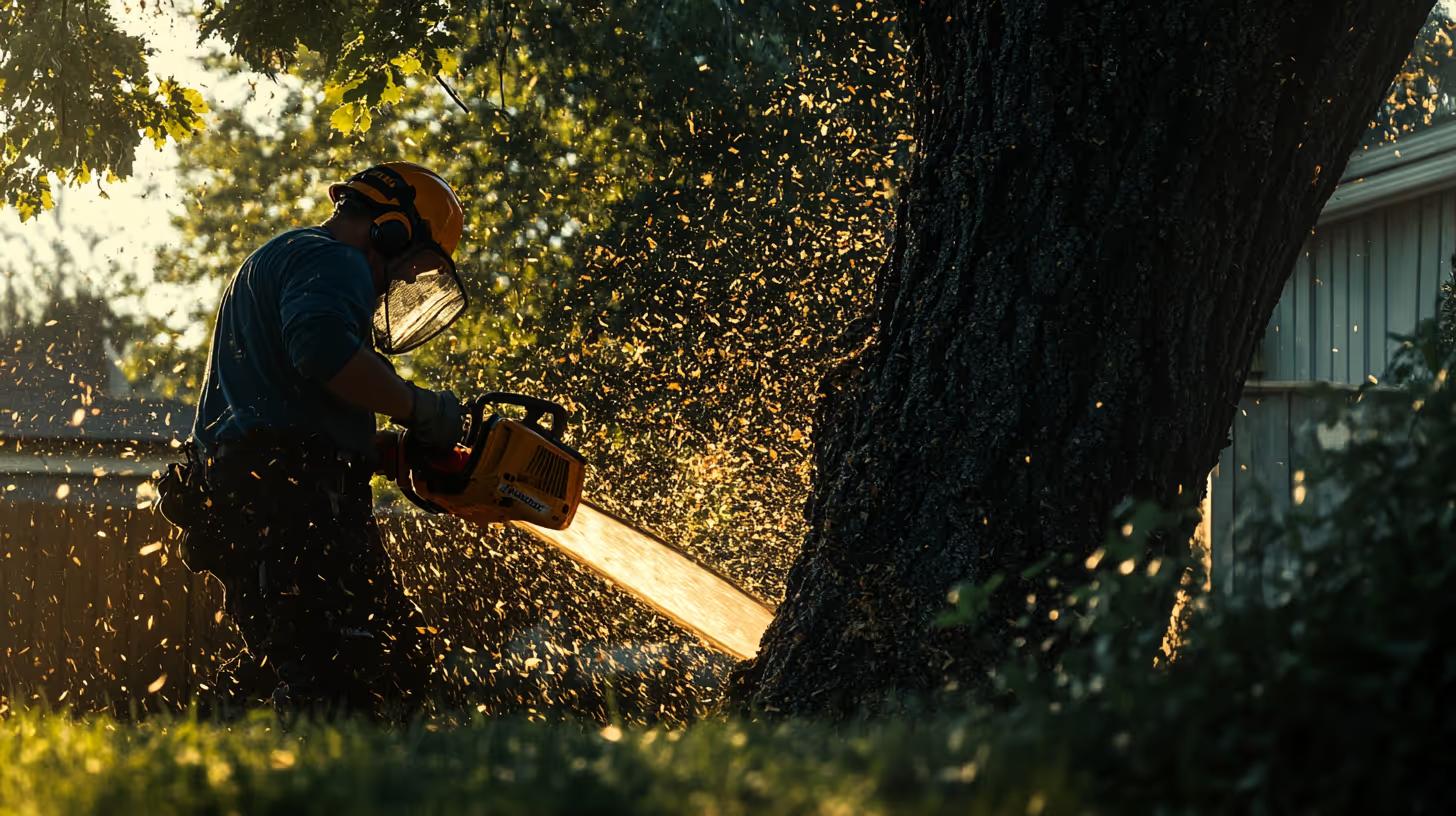
Attempting to remove a fallen tree without the right qualifications and equipment risks injury and property damage. Unsupported branches may move unexpectedly when touched, turning what may have looked like a simple job to a hazardous situation.
Professional arborists have the right equipment and know how to handle emergency tree removal situations. They are experienced enough to assess the ease of dismantling storm-damaged tree parts for their safe removal.
Causes and the risks to watch out for
Trees not brought down entirely by a storm can also be dangerous. Heavy winds and rain and saturated soil affect the stability of trees, and this may not become obvious immediately but can take a dangerous turn later.
Here are some of the common issues one must be wary of:
- Broken limbs and branches
Large branches often remain stuck in the canopy even if they have completely torn from the tree. They are likely to fall on a windy day, posing a serious hazard to people, vehicles and roofs below. - Ruptured trunks
A ruptured or split trunk may appear to be stable, but this may be a far-fetched reality. The damaged part will continue to be under pressure and can fail without warning at any time. - Suddenly leaning trees
If you notice a noticeable change in the tree’s position after a storm, don't ignore it. Call a reliable arborist for a professional assessment. - Damage not visible from the ground
You will not know whether a storm-damaged tree has developed cracks high in the canopy or its structure has suffered a heavy blow unless a professional checks it with specialised equipment. - Roots lifted from soil
Roots hold the soil around the tree, giving it the stability it needs. However, if you notice loosened soil around the roots or find that the roots have been unusually lifted, know that the entire tree may be at risk of falling sooner or later. - Trees fallen onto structures
A fallen tree can damage fences, vehicles, sheds and other property. Never try to cut or move it before calling a trusted arborist for help, as you never know how it may roll or shift unexpectedly.
How does the emergency tree removal process work?
Certified arborists in Sydney manage the removal process from start to finish, so you won’t need to coordinate with separate contractors during the process.
After a quick assessment over a call, a qualified arborist providing emergency services visits the site to inspect the damaged tree and the underlying hazards during removal. Council permit requirements are handled professionally on your behalf, along with the removal of green waste from your site.
Here are the necessary steps involved in the fallen tree removal process:
- Safety check
Upon arrival, the first safety check is to assess whether the storm-damaged tree can remain and what proactive safety measures can be taken to reduce future risks. If the tree remains structurally sound, pruning it where necessary and removing the damaged branches may help mitigate the risk. Keeping a healthy tree is preferred over unnecessary removal. - Damage survey
Avoid touching any tree or branch in contact with power cables, especially if the power supply is affected in your locality. - Get in touch with a reliable insurance provider
Contact your local insurance provider to understand the cleanup requirements of storm-damaged trees. - Take photographs before beginning work
Photographs serve as evidence for council documentation, records, insurance claims, and for giving a clear picture of the damage caused by the storm.
Some local bodies and councils rely solely upon photographic evidence for emergency tree work exemptions. Photos and videos come in handy for your homeowners’ insurance claims.
Remember to keep a safe distance while photographing the damaged tree. - Identify how severe the damage is
A small amount of debris can be managed without professional help. Call a professional arborist providing emergency tree removal services to handle moderate to severe damage. An arborist may need to consider the direction in which the tree is leaning, fences and neighbouring properties, electrical lines, driveways and the vacant spaces where sections of the tree can be brought down.
It may not be feasible to bring down a large tree in one piece. It may have to be lowered in a controlled manner by dismantling the parts progressively.
Professional methods and best-practice considerations
A professional arborist will usually assess the condition of the trunk, major branches and root system, as well as the tree's position in relation to nearby homes, fences, vehicles and powerlines. This helps determine whether selective pruning is enough or whether more extensive work is needed.
Depending on the situation, professional tree work may involve:
- Removing broken or hanging branches that could fall without warning.
- Pruning damaged sections while retaining the healthy and structurally sound parts of the tree.
- Dismantling the tree in stages, particularly where there isn't enough space to safely bring it down in one piece.
- Using controlled lowering techniques where branches or sections need to be removed near homes, fences or other structures.
- Complete tree removal when the damage is severe, and the tree can no longer be safely retained.
- Stump grinding, where required, to deal with the remaining stump after removal.
The method used will depend on the tree's size, condition, location and the risks around it. A tree standing in an open area may be handled very differently from one that is leaning over a house or wedged between other trees.
The key is not simply to remove the damaged tree as quickly as possible, but to make the area safe while causing as little additional damage as possible. A careful assessment and a planned approach can also help avoid unnecessary removal where the tree can be safely retained through appropriate pruning or remedial work.
Signs that the storm-damaged tree requires professional attention
You do not need to diagnose whether a storm-damaged tree is dangerous or not. This is the job of a professional arborist, but you still must pay heed to certain warning signs.
Get in touch with a certified emergency arborist if you notice one or more of these signs:
- A tree leaning noticeably after strong winds
- A major branch dangling or partially detached from the trunk
- Lifted and exposed roots
- Soil cracking and heaving around the base
- A broken trunk
- A tree resting against a structure, building or vehicle
- Damage close to electrical connections
- Ruptured trunk or visible cracks in major limbs
- A large part of the canopy suddenly missing
- Tree moving significantly even during moderately windy conditions
- Large branches caught in another tree
A partially failed tree can be more difficult to deal with because some of its weight and tension may still be held by the remaining structure.
What can go wrong when homeowners try to handle the situation and when to engage a specialist?
DIY is certainly not recommended when it comes to removing storm-damaged trees. In fact, doing it yourself could make the situation worse. Here’s how:
Removing the wrong section first
If a tree is partially damaged, with one part intact and the other failing, removing one section can shift the load to another and result in an untoward incident. Hence, it is ideal to plan professional tree removal rather than considering it as a simple cutting and removal job.
Cutting a branch that is under tension
Cutting a branch in the wrong spot can cause it to roll, spring or move unexpectedly, catching you off guard and without knowing how to respond.
Not paying enough attention to the roots
A tree that is partially lifted from the ground may need to be removed, but not before the trees growing in its vicinity are assessed.
Working with the assumption that a fallen tree can’t be dangerous
Even with a tree fallen on the ground, the branches can give way, the trunk can roll and ruptured sections may drop inadvertently, putting life and property at risk.
Choosing the right emergency arborist in Sydney
Unless the tree has fallen into an open space in your garden with no evident risk to life or property, it may not warrant an emergency. However, a tree leaning towards a house, lifted out of the soil or with large hanging branches obstructing the path require prompt attention. In such cases, seeking expert help is the safest bet.
You may have come across plenty of businesses advertising emergency tree removal services in Sydney. Time is of the essence, so speedy service does matter but it can’t be the only consideration.
Make sure you have a checklist ready to aid your decision.
- How qualified is the service provider to provide the right tree assessment?
- Does it have the right equipment (elevated work platforms, climbing equipment, chippers and other specialised machinery)?
- Is the service provider able to clearly explain the situation, dangers involved, process of tree removal, documentation and safety aspects?
- What will be covered by your insurer, and the records you must keep?
For Sydney property owners looking for emergency tree removal, the best approach is to find someone who can do the right site assessment while keeping safety to life and property in mind.
If you have a storm-damaged tree in the front yard or backyard of your home in Sydney, contact My Green Zone for a thorough assessment and quotation.