
A healthy, lush-green tree is the best, most-functional part of your property. It provides shade through hot summers, adds privacy from neighbouring homes and gives your backyard, well, real character.
But when it begins shedding heavy branches, interfering with a fence or leaning closer to the roof, it can quickly become a concern.
This is typically when homeowners start searching for tree removal cost Sydney and discover there is no useful one-line answer (sigh).
Our Sydney tree removal pricing guide puts small tree removals at around $250–$700, medium trees at $650–$1,500, and large trees at $1,000–$3,000 or more. Large, damaged or awkwardly positioned trees can cost more.
The most reliable way to think about the price is this: a tree in clear, open space is one job; the same tree squeezed between a pool, a powerline and a shared fence is another entirely.
The final quote reflects the planning, people and equipment required to get the tree down safely and leave the site properly cleared.
Request a tree removal quote from My Green Zone for a site-specific assessment and a clear explanation of the work involved.
What determines tree removal cost in Sydney?
Professional and affordable tree removal is a planned operation rather than a single cut at the base.
Before a crew arrives, an arborist needs to consider:
- the tree’s condition
- where it could fall
- how branches can be lowered
- where equipment can be positioned
- how debris will leave the site
A good quote should account for all the work needed, which includes:
- tree height, canopy spread and trunk diameter
- tree health, deadwood and structural stability
- distance from houses, fences, pools and neighbouring property
- overhead powerlines or underground services
- vehicle and machinery access
- slope, soft ground or a confined backyard
- council requirements and supporting reports
- whether the stump, logs and green waste are included
Pro tip: A dead tree can be quicker to process in some situations because it has no foliage. However, decay can make it more unstable and less predictable to climb and rig. The condition of the tree matters just as much as its size.
Main factors that change the price
Access and size both matter equally
Sydney has plenty of properties where the tree is not visible from the street. A narrow side passage, steep block, terrace courtyard or rear-lane-only access can change how a crew approaches the job.
Where machinery cannot reach the tree, branches and timber may need to be carried out manually or lowered in smaller pieces. This translates to added time and labour.
Our tip: When requesting a quote, include a few photos that show the whole tree, the base, nearby structures and the access route. It gives the provider a much better starting point.
Location near buildings, fences and powerlines
A tree in open ground can often be removed using a simpler method. A tree leaning over a roof or growing beside a shared boundary usually needs a more controlled approach.
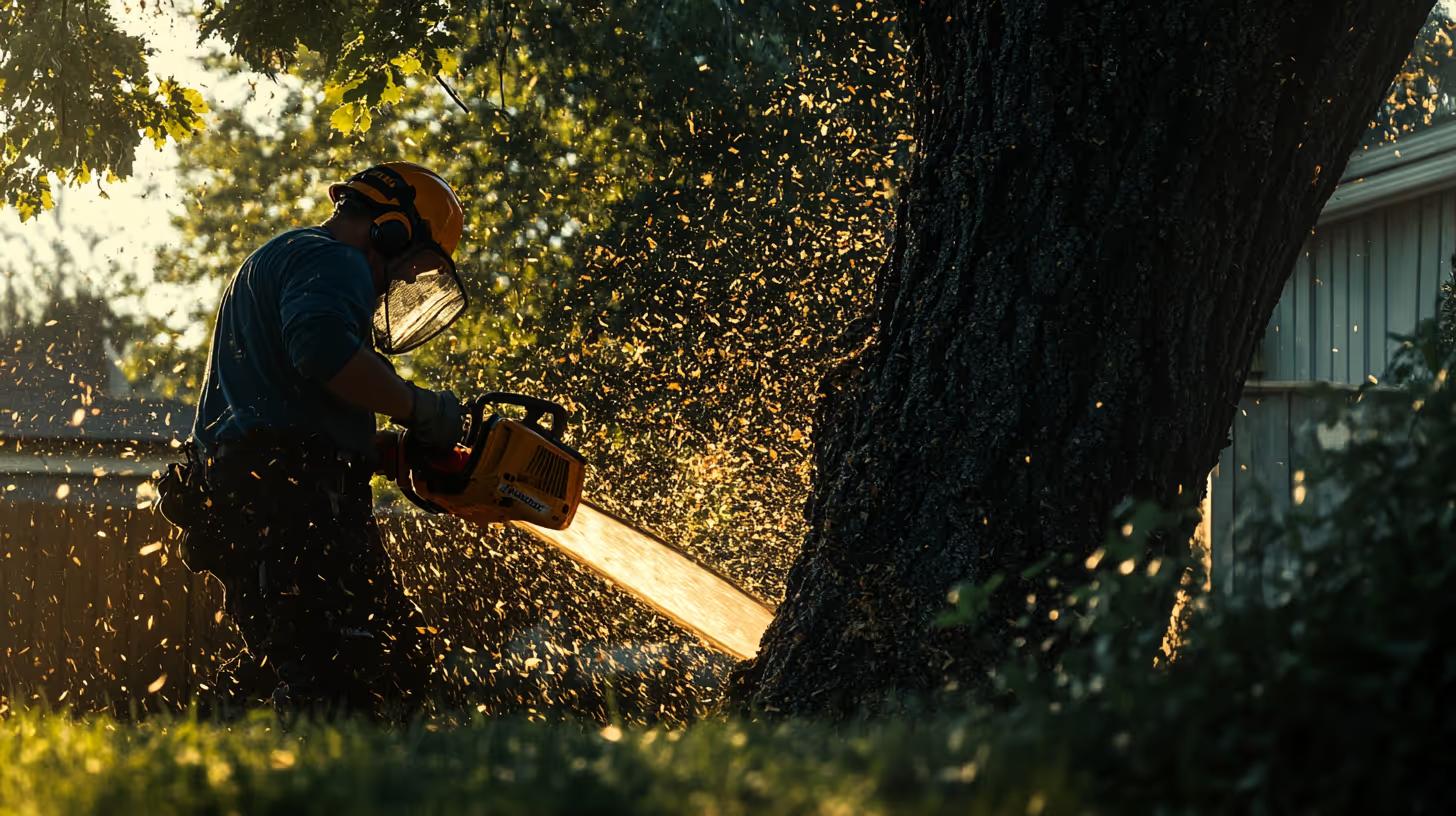
Crews may need to climb the tree, remove limbs in stages and lower each section with ropes. In higher-risk locations, a crane may be the safest way to lift larger timber away from structures. Crane tree work adds equipment and coordination costs, but it can reduce risk and minimise disruption on difficult sites.
Our tip: Never treat powerlines as a DIY task. If a tree or branch is close to lines, tell the provider before booking so the right safety planning and qualifications can be arranged.
Tree condition and species
A healthy tree may be structurally sound enough for standard climbing techniques. However, a tree with decay, a split trunk, extensive deadwood or storm damage may need a different removal plan.
Palm trees, dense broadleaf trees and mature gums all create different amounts of material to process. Large branches, heavy timber and a wide canopy affect the time required for cutting, chipping, loading and site clean-up.
Our tip: Removal is not automatically the best response to every issue. Sometimes targeted tree pruning can remove dangerous deadwood, improve clearance or reduce weight in selected limbs while retaining the tree. An arborist cost assessment helps separate a manageable maintenance issue from a genuine removal requirement.
Council approval and reports
Before arranging removal, check the rules for your council area. Requirements vary across Sydney according to the property, species, dimensions, heritage status and local planning controls.
- NSW Government guidance recommends seeking advice from your local council before removing a tree, as a permit or approval may be required and penalties can apply for unauthorised work. Read the NSW guidance on removing trees from private property.
- In the City of Sydney area, for example, property owners generally need to apply for permission before pruning or removing a tree unless an exemption applies. The council currently lists a $98 application fee and advises that applications are assessed within 28 days. Check the City of Sydney’s current tree removal requirements.
Our tip: The permit fee is only one possible cost. For more complex cases, council may ask for a consultant arborist report, site information or further evidence of the tree’s condition. These items should be discussed before work is scheduled, rather than discovered after a crew has been booked.
What is usually included in a professional service?
The scope varies, so ask for it in writing. A complete and affordable tree removal service will commonly include:
- an initial inspection and removal plan
- safe dismantling, felling or sectioning of the tree
- protection of nearby structures and work areas
- chipping of branches or removal of green waste
- cutting the trunk into manageable sections
- basic site clean-up after the work
Common additional costs to plan for
Ask your provider to confirm these items in the written quote:
| Item | What to check | Its importance |
|---|---|---|
| Stump grinding | Is the stump included in the quote? Will chips be left on site or removed? Is access suitable for a stump grinder? | Tree cutting cost does not automatically include removing the visible stump.Grinding may be needed before re-turfing, paving, replanting or removing a trip hazard. |
| Green-waste removal and mulch | Are branches chipped? Are logs removed or left on site? Does the quote include green-waste disposal and final rake-down? | Some homeowners want mulch for garden beds, while others need the site cleared for landscaping, construction or sale. Confirming this avoids an apparently low quote that excludes clean-up. |
| Emergency or after- hours work | Is urgent attendance required? Has the tree fallen onto a structure, driveway or accessway? Are branches near electrical lines? | Emergency work may cost more because it can require rapid mobilisation, additional safety controls or after-hours attendance. Keep people clear of the area and photograph damage from a safe distance before arranging an urgent assessment. |
How to compare quotes without choosing on price alone
Once you have checked what each quote includes, turn your attention to the people doing the work. Ask each provider:
- Who will carry out the removal, and what arborist qualifications do they hold?
- Can you provide a current Certificate of Currency for public liability insurance?
- Have you removed trees of a similar size and complexity before?
- What method will you use to remove this tree safely?
- Will you need climbing equipment, an elevated work platform or a crane?
- Can you assist with council approval if it is required?
- How long is the quote valid for, and what circumstances could change the price?
- Who should I contact if the site conditions differ from the original assessment?
Our tip: A provider should also be willing to explain why a particular method is recommended. If the job is complex, that explanation is valuable. It tells you what you are paying for and helps you compare like for like. For a deeper hiring checklist, read Licensed Tree Removal Sydney: A Homeowner’s Guide to Hiring the Right Arborist.
When professional help is worth the investment
If you are standing in the backyard wondering whether a damaged tree can wait another year, an arborist inspection is usually the sensible first spend.
A tree near the house, over the fence or showing new damage after a storm is hard to judge from the ground, and getting it wrong can be expensive.
Ask My Green Zone for a quote when you are ready for a straight answer on what the tree needs, what the work involves and what it will cost.