
Your property may have an obstacle in the garden: an unwanted stump from a tree that someone removed. This stump may create a trip hazard, take up valuable space, attract unwanted pests, or simply interfere with the future plans of your landscape. Not to mention that it makes mowing the lawn and maintaining your garden a hassle.
There are two primary options in Sydney for stump removal for the residential customer: stump grinding or the complete removal of the tree stump. While both of these options remove the stump, there are major differences in the processes and the result.
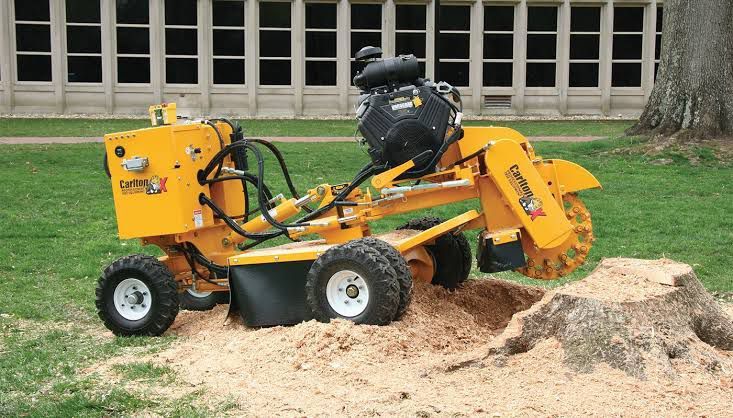
Stump grinding in Sydney involves using specialised machinery to grind the stump down below ground level. The complete removal of a stump requires excavating both the stump and a larger portion of the root system.
Which is the better option for your property? There are many factors to consider, including the size of the stump, where it is located, underground services, access to machinery and what is planned for the area in the future.
My Green Zone guide describes the benefits and limits of each approach to help you make the best decision for your garden restoration project.
What Is the Difference Between Stump Grinding and Stump Removal?
The main difference is how the remaining stump and roots are dealt with.
What Is Stump Grinding?
There are many benefits to stump grinding, including a faster process time and typically a lower cost than stump removal. Grinding stumps also helps break down the stump below ground level, supporting the regrowth of surrounding lawns and other plants. Stump grinding also eliminates the need for large equipment to be hauled onto your property.
Once the main part of the tree is removed, the root system usually remains in the ground. Over time, the root system decomposes naturally.
Stump grinding is a common method of tree stump removal that improves the garden's appearance, removes a trip hazard and prepares the ground for the installation of new turf and landscaping.
What Is Full Tree Stump Removal?
To fully remove a tree stump and root system, the ground around the stump is initially dug up, and the roots are cut or exposed, and the stump is fully removed from the ground. This process may require heavy machinery.
This method removes most of the stump and a large portion of the root system. This step may not always be necessary or practical to completely remove all of the roots.
Full removal may be more applicable to large land or construction projects that require removing a large tree and its associated major roots.
Stump Grinding vs Stump Removal at a Glance
Stump Grinding vs Full Stump Removal
A quick side-by-side comparison of both methods. Final cost and suitability depend on stump size, access and site conditions.
| Factor | Stump Grinding | Full Stump Removal |
|---|---|---|
| How it works | Grinds the stump below ground level | Excavates the stump and major roots from the ground |
| Root system | Most roots stay underground and decompose naturally | Most of the root system is extracted |
| Ground disturbance | Minimal – protects nearby lawns and garden beds | Significant excavation of surrounding soil |
| Typical cost | Usually lower | Usually higher (machinery, labour and disposal) |
| Time required | Usually quicker | Usually longer |
| Access needs | Compact grinders suit narrow side access and small backyards | Often needs larger machinery and clear access |
| Underground services risk | Lower, but services should still be located first | Higher – more digging near pipes and cables |
| After the job | Woodchips to remove or reuse; soil may settle over time | Hole is backfilled and levelled |
| Best for | Lawns, garden beds, turf and most residential yards | Construction, retaining walls and major landscaping |
Use this comparison as a starting point. An on-site assessment will confirm which method suits your stump, access and future plans for the area.
How Each Option Works
The Stump Grinding Process
Professional stump grinding generally follows these steps:
- Site inspection: The arborist assesses the stump's size, condition, location and access requirements.
- Safety assessment: Underground services, nearby structures and potential hazards are considered.
- Machine positioning: Suitable grinding equipment is positioned around the stump.
- Grinding below ground level: The machine progressively reduces the stump and accessible surface roots.
- Material management: The resulting woodchips are removed or left for suitable reuse, depending on the agreed service.
- Site preparation: The area is levelled or prepared for the next stage of landscaping, which is included in the service.
The required grinding depth depends on the intended use of the area. Preparing a lawn may require a different depth than preparing a site for construction.
The Full Stump Removal Process
Full removal usually involves more excavation and ground disturbance.
- The site and surrounding ground are assessed.
- Soil around the stump is excavated.
- Accessible roots are exposed and cut where necessary.
- The stump is extracted using appropriate tools or machinery.
- The resulting hole is backfilled and levelled as agreed.
- The site is checked before landscaping or other work begins.
Disrupting more roots and soil may mean that we need more activities, machinery, and waste removal at the end to reinstate the area.
Advantages and Limitations of Each Option
Advantages of Stump Grinding
Less disruption to the garden: Stump grinding disturbs less soil and hence can better protect adjacent areas such as lawns, garden beds and other landscape.
Often quicker and more economical: Stump grinding often costs less than full removal and usually takes less time. This is because full removal requires more excavation and disposal than grinding. The final cost and time depend on access and conditions of the site as well as the size of the stump.
Suitable for landscaping: Stump grinding makes it possible to use the area for gardening, lawn, or other landscape.
Useful for confined spaces: Stump grinding can be useful when space is limited, because smaller grinders can access small spaces other large machinery can't.
Limitations of Stump Grinding
Roots remain underground: The root system doesn't always get removed during the stump grinding process and will decompose over time.
The ground may settle: The soil above the decomposing stump may also settle over time.
Not ideal for every construction project: If substantial groundworks or deep excavations are planned, the removal of the remaining roots may also be necessary.
Woodchips require management: The material left over from the stump grinding process may need to be disposed of or reused as mulch or fill.
Advantages of Full Stump Removal
More of the root system is extracted: This process may help with excavation or construction that is obstructed by roots.
Suitable for major landscaping: This method may also help with the construction of a ground retaining wall or other landscape structures.
Reduces the amount of buried stump material: This procedure also reduces the amount of wood that will take a long time to decompose.
Limitations of Full Stump Removal
More excavation is required: This may also affect surrounding soil or plant life.
Potentially higher costs: Machinery, labour, access limitations and disposal requirements can increase the overall expense.
Underground services need careful consideration: The process may disturb or damage underground pipes and cables.
It may be unnecessary: If soil compaction or levelling is all that is needed, stump grinding may solve the problem.
Which Option Is Best for Different Situations?
The best option depends on how you plan to use the area after the stump is removed.
For Lawn Restoration
If your aim is to have a neat lawn, stump grinding is a sensible first step. The stump can be ground below ground level, and the area can be prepared with soil or topsoil.
You can expect the soil to settle fully, and your contractor can help you prepare the turf.
For Garden Beds and New Planting
You can improve the garden bed by stump grinding and planting nearby vegetation.
If you plan to replant a tree in the same location, you need to consider whether the soil and roots will be adequate to support the new tree and whether the space will allow you to establish its root system. In such instances, removal of the entire stump could be a better option.
For Construction and Major Landscaping
If you are preparing an area for the construction of a new building or retaining wall or extensive excavation, the removal of the stump may also be required.
The builder, landscape architect or other site professional can recommend the extent of roots that will need to be removed. Stump grinding may not be sufficient for the work.
For Small Backyards and Narrow Access Areas
Most properties in the Inner West, Eastern Suburbs and North Shore of Sydney have narrow side access and small backyards.
Compact stump grinders are available for situations where machinery access is restricted. Mechanical removal of the stump may not be possible if machinery cannot reach it.
A site inspection can determine if equipment can be used that will not endanger the client's property by damaging fences, paving or landscape features.
For Large or Mature Tree Stumps
The size and complexity of the stump will affect the time required to grind or excavate it. Difficult access and proximity to buildings will also affect the time required and the cost of the work.
For excavation of a large stump, expect to pay more than the estimated prices for a smaller stump in Western Sydney, the Sutherland Shire or the Northern Beaches. An on-site assessment will help determine the exact cost.
Common Mistakes When Choosing a Stump Removal Method
Choosing Only by Price
The cheapest method may not achieve your long-term goals for the land. Make sure you understand the scope of work provided by each service, for example, how deep the stump will be ground, whether the contractor will remove the stump material and whether the site will be cleaned up and levelled upon completion.
Assuming Grinding Removes Every Root
Stump grinding will reduce the stump and roots that are within the reach of the grinding head; however, the majority of the root system is still in the ground. For projects where you need to remove a significant amount of root system, please let us know before work commences.
Ignoring Underground Services
During stump grinding or excavation work, a number of hidden underground services can create a safety hazard. These include underground power cables, gas lines and services, water and sewer lines, and telecommunication lines.
The contractor should have the underground services assessed and located prior to work commencing.
Forgetting the Final Landscaping Plan
The depth required for seeding lawns may be different from the sub-base required for paving or construction. Tell the contractor how you would like to use the area and agree on the sub-base requirement before the work commences.
Attempting to Remove a Large Stump Yourself
Excavation and stump grinder equipment can cause serious injury and property damage. Large roots can also be difficult to control.
A professional assessment is recommended for stumps that are close to retaining walls, fences and underground services.
How to Make the Right Decision
Before booking stump grinding or tree stump removal in Sydney, consider these steps:
- Identify the intended use: Decide whether the area will become a lawn, garden bed, paved surface or construction site.
- Assess stump size and location: Larger stumps and restricted access may affect the method and cost.
- Check nearby structures and services: Identify potential conflicts with pipes, cables, fences and foundations.
- Compare written quotes: Confirm the proposed method, grinding depth, debris removal and site reinstatement.
- Discuss root management: Ask whether remaining roots could affect the planned landscaping.
- Plan the restoration: Arrange suitable soil, turf, planting or paving after the stump work is complete.
Prior to 2018, stump work was typically scheduled as a follow-up service to tree removal. However, many arborists now offer stump removal as part of their services. Check your quote to see if stump work is included.
Stump grinding can improve the look of your garden and, unlike stump excavation, causes minimal damage to your surrounding garden.
Why Choose Professional Stump Grinding in Sydney?
Professional stump grinding can help clear unwanted stumps while limiting unnecessary disturbance to the surrounding garden.
My Green Zone specialises in stump grinding in Sydney, using the right equipment for the job and removing any wood chips that we generate.
The team provides tree removal services in Sydney as well, which may be useful if the tree has not been removed already.
They service the Inner West, Western Sydney, the North Shore, Eastern Suburbs and the Sutherland Shire.
A professional assessment can help determine whether grinding is sufficient or whether full stump extraction is necessary for your landscaping plans.
Final Thoughts
Stump removal or stump grinding can enhance the safety, appearance, and use of your outdoor space.
For most residential land, stump grinding is a reasonable option, as it removes the stump with less excavation. Removal may be more appropriate if a significant part of the root system needs to be removed for construction or deep landscaping.
The appropriate choice depends on the conditions of your land, access, your budget, and how you plan to use it.